The year 2013, now coming to an end, was once again a year full of challenges. The following figures illustrate this for the European economy: in the EU-28, gross domestic product in the third quarter increased by only a modest 0.1% compared to the previous year. In the eurozone, the economy even had to accept a decline of 0.4%.
Across the EU, 17 growing economies were contrasted with 11 losers. Everything seems difficult and unstable, which is "confirmed" to us every day through various media channels.
We as customers, but above all we as entrepreneurs, notice: the world of commerce is upside down, everything is in transition. Online, offline, mobile, multi- or omnichannel strategies mix more and more, and the unavoidable question arises: how do you best reach customers today? Uncertainty spreads.
Yet everyone knows that times of change also bring new opportunities, first and foremost for the brave. Smart companies have recognized that distinctive services can be used deliberately to sharpen positioning, increase loyalty and win new customers, and they take the initiative. In the spirit of Charles Darwin's apt insight: "It is not the strongest species that survives, nor the most intelligent; it is the one most adaptable to change."
The clear trend toward a service society follows the transformation of our personal modern world. Work and leisure merge more and more, mobility and flexibility shape everyday life. Naturally, entirely new customer needs emerge.
Time is more central than ever. A creative and satisfying way of handling precious, scarce lifetime becomes the decisive "consumption product". The future lies in the intelligent combination of industry and optimally complementary services, in other words: in creating holistic and convincing customer experiences.
This trend can be observed worldwide. In many industries, innovative services are already creating unmistakable company profiles that are a clear step ahead of competitors with conventional services.
Service Trend 2014: Co-creation in self-service
Complicated and uninnovative self-service machines, and the standardized, mechanized "handling" of products or services by the unpaid employee called the customer, have a clear expiration date. The future lies in tailor-made services that meet the needs of modern life.
The "Briggo Coffee Haus". This company from Texas, with a business idea that fits the modern zeitgeist perfectly, not only offers customers a fully individualized cup of coffee, but also an innovative, uncomplicated path to get it. This could even make Starbucks think. Briggo's motto: "We believe perfect is personal. We empower people to create their perfect cup of coffee!"
The company also places great value on sustainable coffee production and fair payment of everyone involved, meeting a demand of many modern customers. All varieties are purchased directly from coffee farmers and processed into a "perfect experience" for the customer using state-of-the-art technology and innovative execution. In practice it works like this: link
McDonald's "Build your own burger". This new idea at McDonald's also fits the trend of fulfilling individualized customer wishes in addition to standardized offerings. Customers can "design" their favorite burger themselves: with the help of special software on iPads provided on site, they select all ingredients, from bun to sauce. Initially this was offered in two BYOB McDonald's restaurants in Southern California and Illinois, but more will surely follow.
Individualized "Stantt" shirts. This company, a producer of men's shirts, also follows the modern path of fulfilling individualized customer wishes instead of standardized sizes like S-XXL. The revolutionary approach is enabling customers to get perfect made-to-measure clothing quickly and easily, without an awkward body scan, simply by entering three personal measurements. The basis for guaranteed fit is a database with 50 size models from countless 3D body-scan data points and a sophisticated algorithm. See for yourself: link
Service Trend 2014: Retail reinvents itself
The offline world still has far more possibilities for personal service than the web, and where it makes sense it can be connected to the online world without problems. There are many examples of established companies that have already turned this into a success factor.
"Eataly" is a successful mix of interactive food experience, scene location and premium grocery retail. A vibrant place full of experiences, where customers not only discover new products, but also learn about their origin, see the right preparation demonstrated and enjoy the food on site. Eat, buy and learn - now in many locations across the USA, Italy, Japan, Dubai and Turkey. Highly contemporary, highly successful. Impressions from New York: link
At "Topshop", customers can try on clothing quickly and easily without changing. This is enabled through augmented reality combined with Microsoft Kinect. Customers see themselves on a large screen wearing a 3D copy of the selected item and can control everything with simple hand movements. In addition, photos can be sent to family and friends, because their opinion is important to many customers. Not only digital natives will love this. Take a look: link
The "Adaptive Storefront" brings life into shop windows. Display windows transform from passive viewing spaces into adaptive experience objects that adjust their content to the people standing in front of them. Even storefronts can be individualized and show each customer their very personal offer.
The control technology uses Bluetooth Low Energy (BLE) to interact with viewers' phones and responds to shopping behavior and personal data. Customers can browse, place items into a virtual cart and order immediately, 24/7. This kind of interactive "storefront" can be implemented in many places - wherever people are out and about. Do not miss the demo: link
Service Trend 2014: Omnichannel is the new multichannel
While multichannel customers use different sales channels sequentially, omnichannel customers use different options (store, catalog, call center, online shop, social media platform, smartphone app, teleshop, self-service machine, etc.) in parallel for their buying decision. There will also be strong growth in "click and collect" offers: selecting goods online, ordering online, and then picking them up offline in a store. This includes subscription shopping functions for regularly needed products, same-day delivery, or precise delivery of grocery bags to the customer's home. A personalized service orientation as close to modern customer needs as possible is at the heart of these innovations.
"KeyMe" is the name of a new tech startup in New York City that seriously challenges the previously lucrative locksmith industry. Customers download the KeyMe app, copy their keys at a KeyMe kiosk, and KeyMe stores the necessary data (secured by the customer's fingerprint) to reproduce keys. Customers can send a key to a family member easily, have keys copied at any locksmith, order an extra copy to be shipped home, or get an emergency replacement key delivered to their door within 30-60 minutes. In a big city like New York, that is a truly clever service. Short video: link
Connecting online ad videos with immediate shopping at Kate Spade, a US designer and namesake of the brand she co-founded, whose handbags became globally known through Sex and the City. The company's website shows an ad video with an integrated product carousel. While customers watch the video, the products shown can be clicked and ordered directly. Research shows that ad videos are usually ignored or clicked away - but this interactive product presentation not only creates value for customers, it also increases sales. See: link
With its own "Guideshops", Bonobos offers customers the option to select and try on clothing offline with support from personal shopping advisors. The items are available as sample models in all sizes and styles. The purchase then happens online. Customers can choose their favorites in peace and order them, and the data captured in the guideshop is used to produce individualized pieces and deliver them to the customer's home. The concept creates a very personal advisory atmosphere, allows appointments, and ensures all models and sizes are available for trying on - without requiring huge retail floor space. A good idea for organic growth without large investments. How it works: link
With "iBeacon" technology, it becomes possible to address customers in-store via their smartphones. If a customer is interested in a product, they receive information about the item, but also price comparisons, reviews, social media posts and more directly on their smartphone. Companies can also use the system by being automatically informed when loyal customers enter the store and seeing their last purchases.
Apple introduced iBeacon APIs with iOS 7; they enable indoor positioning of iPhones and iPads. Small antennas are used and data is transmitted via Bluetooth Low Energy. By locating within a store, apps can show relevant information or a map.
The plans go even further: if someone likes a product online, they should be reminded of that like offline in the store. These videos explain how it works in practice: link 1 or link 2
My personal megatrend for 2014, and probably "for eternity": the perfect customer experience. Why? It is biologically logical.
Research shows that humans are evolutionarily designed as social beings. From the beginning it was biologically unavoidable to support and help one another, because it was about nothing less than survival in a dangerous environment. This basic impulse is still at the core of every service idea: helping and being helped. The prehistoric aspect matters because it explains why services are intensely and unavoidably connected to emotions. Services touch a level deeply anchored in human biology.
We feel personally attacked when a service goes wrong. We take it more personally than if we do not like a jam, a T-shirt shrinks in the wash, or a tire wears out too quickly. The mechanism is archaic: we wanted to be helped by this company, but we were ignored, poorly advised or simply not understood by its employee. An affront to our nature. Difficult, deeply rooted, and hard to make up for.
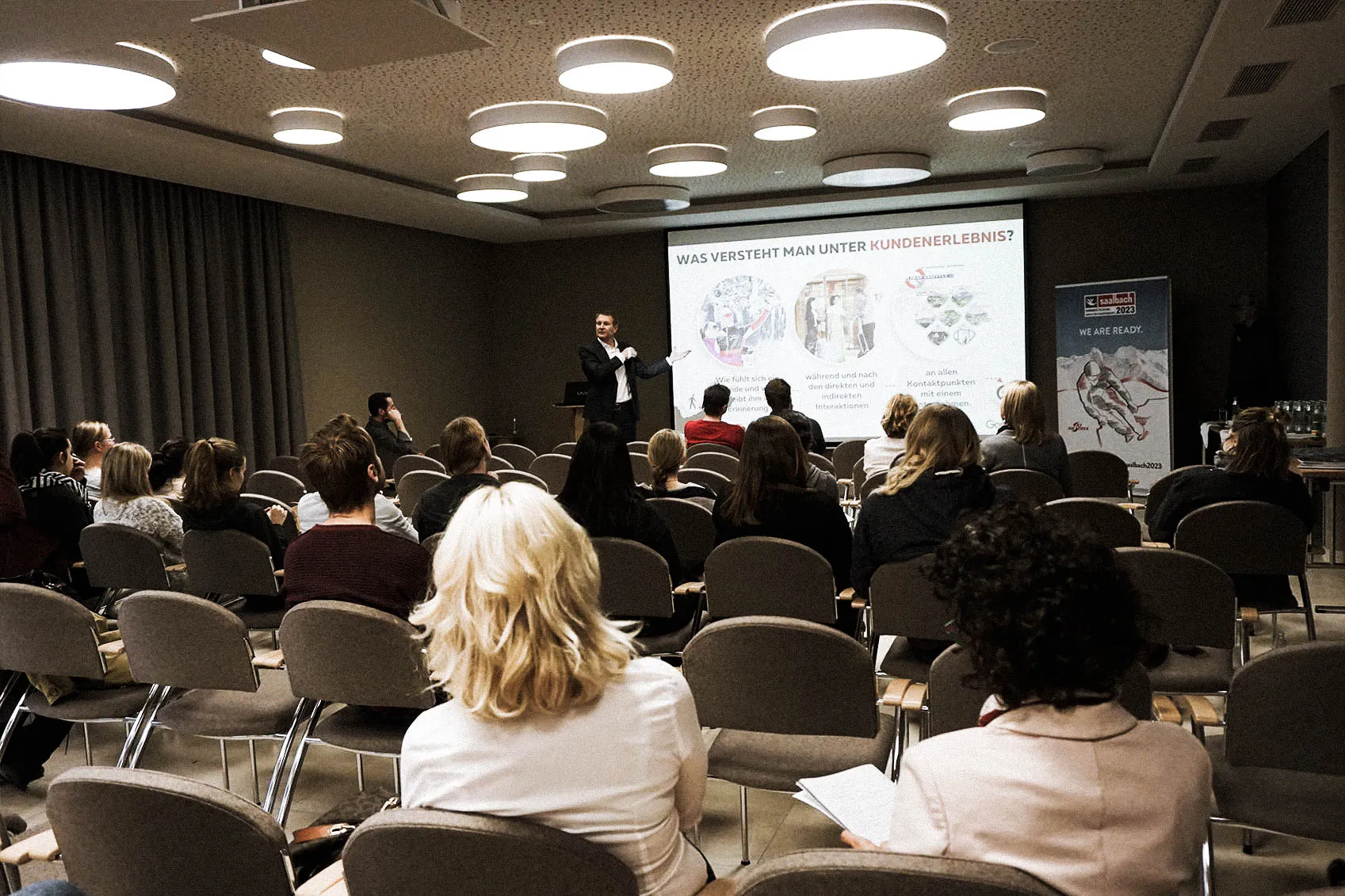
The central point for business success today and tomorrow is the perfect customer experience. In other words: how does a customer feel, and what do they remember during and after direct and indirect interactions across all touchpoints with a company?
Think about your own company: does the brand promise match the current customer experience? How are your employees and their services for your customers? These are central questions for your future business success. Unavoidable.