Is there such a thing as perfect customer retention?
The holiday season is over, and perhaps you too have thought about customer retention in your company - during a hike in the mountains or a walk along the beach.
Can customers still be retained by a company today? Does customer satisfaction automatically create loyalty? Many customers switch providers even though they were actually satisfied with the original company. Others remain loyal even though they are often dissatisfied.
So the question arises whether there is such a thing as the "perfect customer relationship". Maybe not. But it is certainly not wrong to strive for it. Long-term customer retention is undoubtedly a decisive success factor for companies. So what can you do concretely to perfect customer retention?
The starting point
A prospect has bought a product or used a service and has thus become a customer. What happens now? Unfortunately, in many companies: nothing at first.
Despite all promises, customers are often left on their own after a purchase - no trace of active customer support. Many companies expect customers to come on their own if they have a question or problem, and likewise if they want to buy something additional.
But this creates the risk that, before every additional purchase, customers are pushed back into the role of prospect. That is a fundamental problem because customers then restart the selection process for the best provider, with an uncertain outcome for the company that won the last time.
What is customer retention?
The "customer retention medal" has two sides: the customer's perspective and the company's perspective.
From the customer's perspective, retention is the willingness to make repeat purchases from a specific provider. Both cognitive and intentional aspects play a role. This willingness is not always voluntary; it can also be caused by legal ties or situational circumstances (no alternative provider, switching costs, etc.).
From the company's perspective, retention includes the use of target-group-oriented strategies and derived measures to stabilize business relationships in the long term and expand them sustainably. Emotional and rational preferences should be created, as well as switching barriers, which manifest in customers' current behavior and in their future intentions toward the company and its offerings.
The devil is, as always, in the details...
Here I want to point out an important factor that often leads to the failure of retention efforts: companies often do not distinguish between customer retention (the factual "being bound") and customer loyalty (the personal attachment).
Loyalty describes a positive attitude toward a company combined with a willingness to buy again "sometime" in the future. Loyalty is voluntary; it cannot be demanded. It is a gift customers give out of conviction.
But it is still only an intention, not a reliable forecast of actual repeat behavior. Only when customers actually act on their intention do we speak of retention. Sounds complicated, but that is how it is.
The determining factors for perfect customer retention
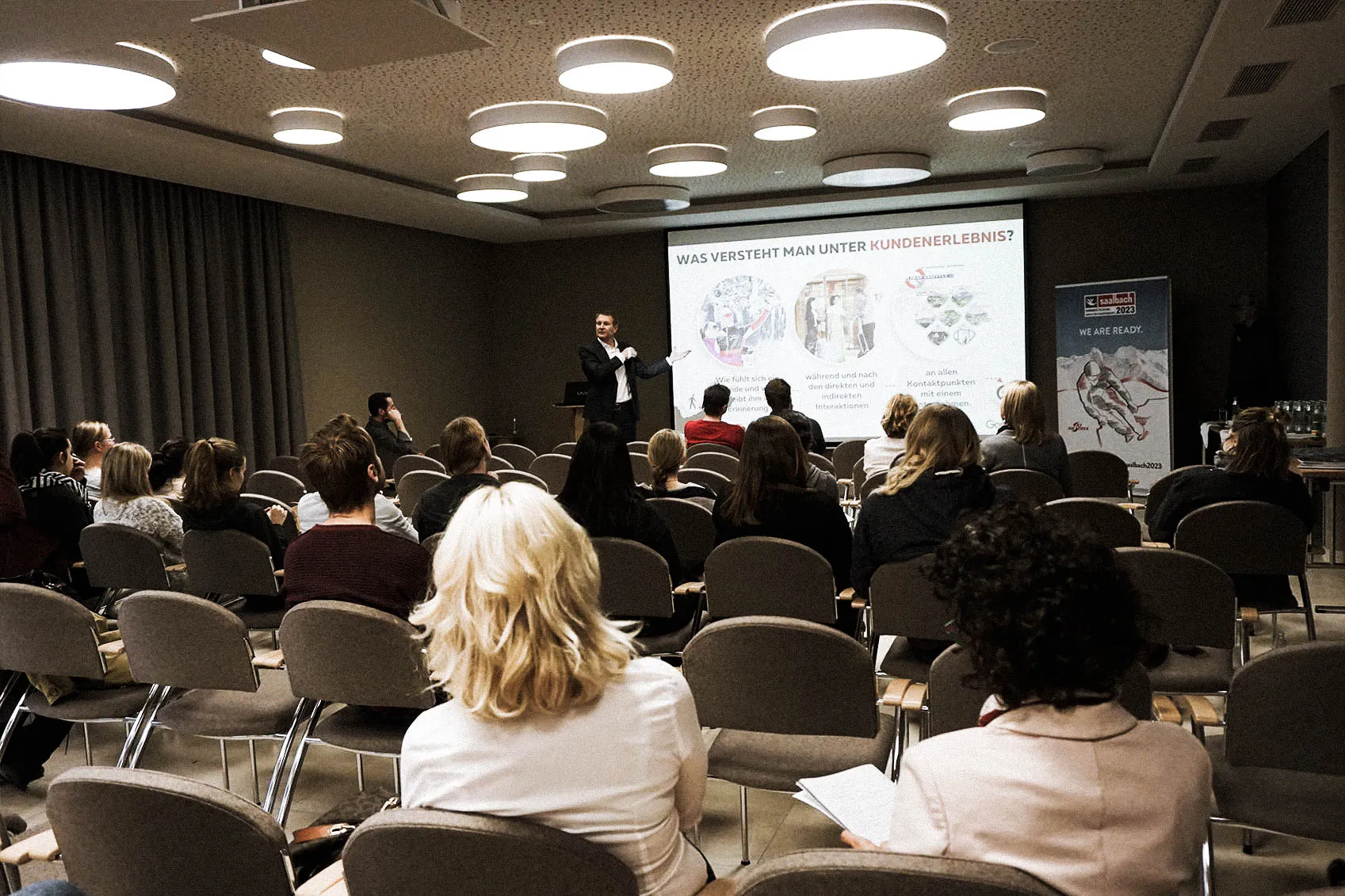
The customer experience: How does a customer feel and what remains in memory during and after direct and indirect interactions across all touchpoints with a company? Many individual elements are needed to stage an excellent customer experience, and they are of course different in every company.
They always lead to the customer's experienced comparison between the original brand promise (or company promise) and the actual everyday service reality. The goal is an emotional bond between customer and provider/brand. Customers should become enthusiastic ambassadors and, through word of mouth and active recommendations, contribute to the company's economic success.
Customer satisfaction: Customers are especially likely to stay with a company when they were satisfied in previous purchases or service consumption. Satisfaction can therefore only arise after a purchase or consumption.
It includes emotional and rational elements and is the result of an individual psychological comparison process. But satisfaction does not automatically lead to retention.
Research shows that changes in satisfaction can lead to different effects on retention. When satisfaction is high, even a small deterioration can sharply reduce repurchase intention. If a company can not only satisfy but truly delight, that form of satisfaction can have a strong impact on sustainable retention.
Net benefit: This factor results from the customer's overall assessment of what they receive and what they must invest (time) and spend (money). This primarily rational, comparative evaluation can happen before or after a purchase or consumption. It reflects the customer's perceived surplus benefit beyond their costs.
Switching barriers: Switching barriers are mechanisms that make switching to another provider harder or more costly. They create legal, financial or emotional hurdles for customers.
Trust: Fair business relationships are based on trust between customer and provider. Only customers who emotionally trust a company can become and remain loyal customers.
Product quality: Even if customers are satisfied with the quality or functionality of a product (or the outcome of a service), their loyalty is not guaranteed. The comparison between quality and price, and between quality and competing products, must be positive for customers to remain loyal.
How do companies try to retain customers today?
Companies know that acquiring a new customer costs six times more than keeping an existing one. And so almost every retail or service company offers different benefits or rewards once customers have been classified as "regular customers". In industrial contexts, this classification often follows ABC analysis, depending on revenue and profitability.
As a rule, the offers and the chosen communication channel depend on the timing of interaction between customer and company.
Before use or purchase: for example announcing discounts or other benefits, customer magazines, newsletters, contests, preferred purchase options.
During use or purchase: for example preferred treatment, shorter waiting times, visible status, more extensive advice.
After use or purchase: for example delivery service, premiums, gifts, vouchers, loyalty cards, extended warranties, customer clubs.
In summary, common retention instruments revolve around material benefits, social recognition, structural ties, or a mix of the three.
The big discount: customer retention through aggressive pricing?
Grocery retail focuses its retention efforts almost exclusively on price. No other industry tries to bind customers so strongly through material rewards. What used to be the domain of discounters has long become reality for established players as well.
A prominent example in Austria is Billa (part of the REWE International Group) with its many stores. At Billa, anyone becomes a "regular customer" once they fill out an application form at the cashier. The loyalty card is effective immediately and a plastic version follows within days.
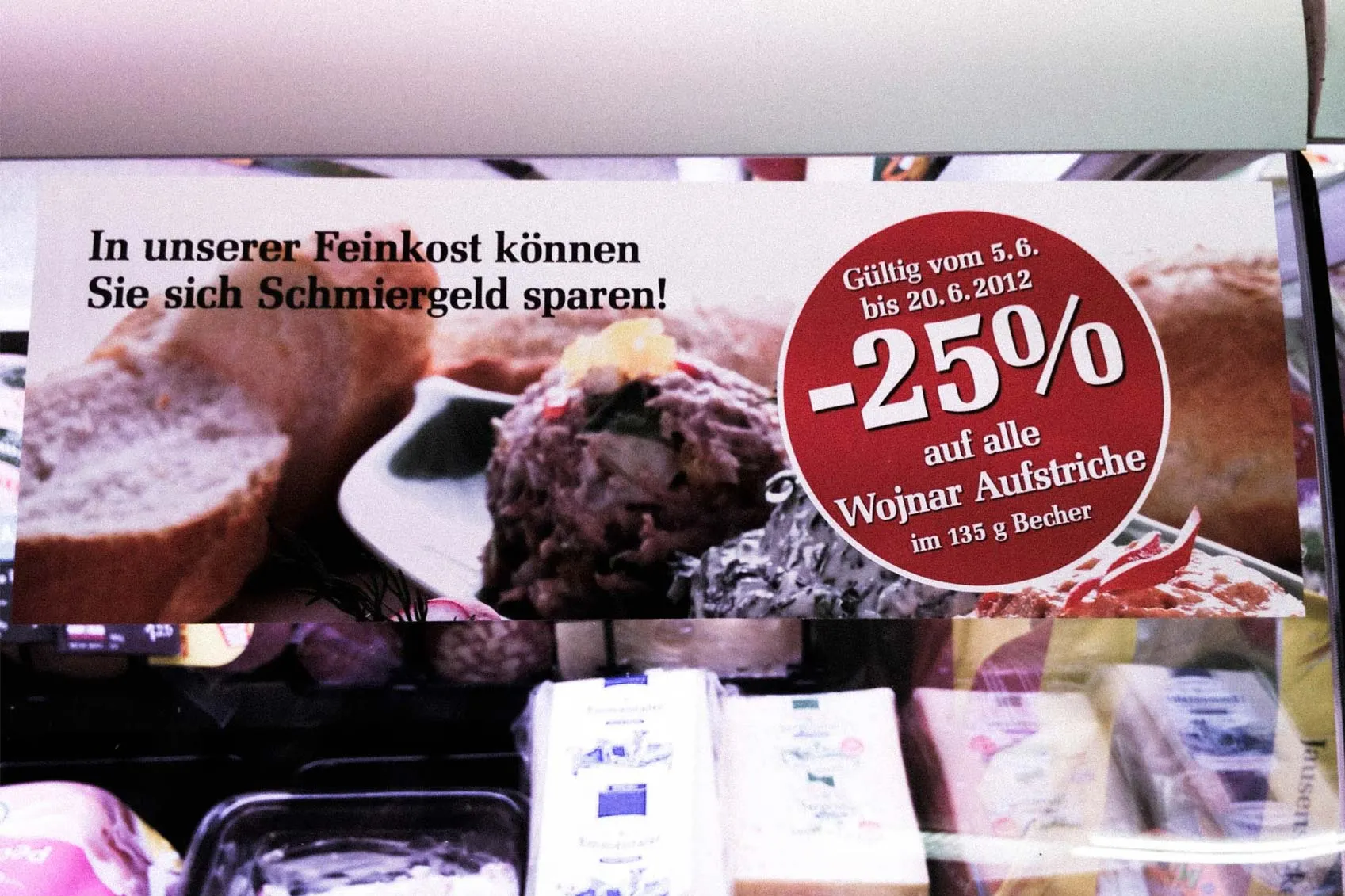
The discount madness can start right away - for example -25% on all beer varieties plus up to 20% through a discount collector - and customers end up buying a bottle of beer for almost half the price.
But who pays the difference, and where can this kind of discounting lead in the future? Free groceries and a shopping-cart fee? The retro version, the "discount stickers", does not change the underlying dynamic either.
This price spiral is hard to escape. It causes short-term customer migration to competitors when prices increase, and customer inflows when prices decrease. The industry wants customers to buy more in exchange for valuable customer data: name and address, analysis of purchasing behavior, customer profiles, targeted advertising and other marketing measures.
From a psychological perspective, however, acceptance of loyalty cards decreases with increasing (and justified) fear of data misuse. The biggest issue is that many customers, labeled as "regular customers" by the company, fall in love with the discount program itself and do not build a sustainable emotional bond with the company. They then switch immediately to the next provider if they can save more there.
There is another way: "retention with passion" at Hilti
In a world that is becoming faster, where products and services are often interchangeable, it is essential for Hilti to retain customers long term and turn potential or occasional customers into loyal customers. Two aspects strongly influence Hilti's customers' purchasing behavior: the quality of products and services, and the way customer care is delivered before, during and after a purchase.
Hilti stands for quality and reinforces its brand promise "More performance. More reliability." on construction sites every day. But what is the basis for companies that commit to doing more for their customers? The passion of each employee for the company and the enthusiasm for its products and services.
At Hilti the saying goes: "No passion, no success - no success, no passion!" Hilti even included the word "passionately" in its guiding principle: "We passionately create enthusiastic customers and build a better future." It is about caring comprehensively for customers, creating a positive experience and leaving a lasting impression so customers become ambassadors of the brand.
Sometimes small things create retention without costing much
Have you ever walked through a city center after closing time and wondered why so many people (mostly teenagers) are sitting in front of a store? The store is an Apple retail location - but no, they are not camping to get a new iPhone.
Apple lets customers (and "not yet customers") use its Wi-Fi network for free around the clock - worldwide at all locations. That is also a form of retention, with multiple benefits.
People meet, communicate with their contacts and with each other - also about the brand, the products and their use. And what do passers-by think about this group of people connected in front of the storefront? Maybe: "That is what real fans look like."
Focus on emotional customer retention
Do not rely only on current revenue numbers or on surveyed customer satisfaction to evaluate the quality of your customer relationships. Studies show that even highly satisfied customers are increasingly disloyal.
Work toward emotional customer retention and turn customers into fans. Real fans are not those who simply click "like", but those who are sustainably delighted and therefore loyal to your company, and who turn their emotional bond into purchases and recommendations that you can feel economically.
What can I do concretely to perfect customer retention for my company?
Emotional retention is a personal, emotional relationship between customers and a company or brand, and it is decisive for economic success. Every direct or indirect contact can strengthen or weaken that bond. It is up to the company and all employees to build it further.
Four factors are needed for emotional retention: passion, enthusiasm, integrity and trust. But you cannot assume that employees will automatically make these factors tangible in daily work in every situation.
Instead, you must develop the customer experience, stage it, train it, review it regularly and improve it further. Only then can customers be served and advised, but also informed and truly delighted.
In this context, service means precisely understanding customers, their wishes, needs and choice preferences, and fulfilling all of this proactively, with competence, individuality, authenticity and quality, in an uncomplicated way. The company must live up to this at every customer interaction with real dedication.
Every employee, every department and every process must be aligned with fulfilling the brand promise. Ultimately, the customer experience consists of all touchpoints customers have with products, services and, not least, employees.