Customer experience? What is that supposed to be? Of course I can remember experiences with my customers. Some customers are an experience... STOP, please do not go down that road!
By customer experience I mean the experience the customer has with your products and services - before, during and after the purchase or consumption. In the USA, customer experience and customer experience management (CEM) have been a topic for a very long time.
Let's take the classic example: Disneyland, the theme parks of the Walt Disney Company. Disneyland in Anaheim, California, was founded in 1955 as the first Walt Disney park. It was built as a nostalgic reproduction of an American town at the beginning of the 20th century. This idea was ultimately implemented in all Disneyland theme parks and is today known as Main Street, USA. There are currently 13 Disney parks worldwide in four countries on three continents (North America, Asia and Europe).
Great, many will think: (1) that is nothing new and (2) my company is not Disney or an amusement park. True. But companies, whether in services or manufacturing (in truth, the line between the two is getting blurry), can learn a lot from it. The most important insight: "Extraordinary customer experiences do not happen by accident!" Nothing at Disney parks is left to chance. Not the infrastructure, not the processes, not the products and services, and certainly not the employees and their interaction with visitors (= customers).
Everything is planned in detail and executed like an orchestra, based on the customer experience that was clearly defined as the goal beforehand. When, for example, Typhoon Lagoon was built at the Disney Resort in Florida, it was not inspired by a random landscape feature or some empty area that simply had to be filled. No: the goal was to offer a specific customer experience (before arrival; while using the attractions; while enjoying the culinary offer; while buying specific toys, useful items or souvenirs; and with active support (taking and selling action photos/videos) or passive support (designing and providing viewpoints and photo/video motifs) to help create personal memories for guests).
The chosen theme "Typhoon Lagoon" served as the foundation for the intended customer experience. Is that still too abstract? Do you still associate "customer experience" with a mix of funfair and bungee jumping? Fine. Then follow me from theme parks to customer experience in retail. The Apple Store is perfect for this.
"Again, a famous brand backed by a huge corporation - what does that have to do with my business?" Open up, put your current situation in the background for a moment, and take advantage of the success formula of a trendsetter and market leader. The key is to look for patterns of success, understand them, and then insert your own numbers and values into that "formula". The formula works - you define the frame.
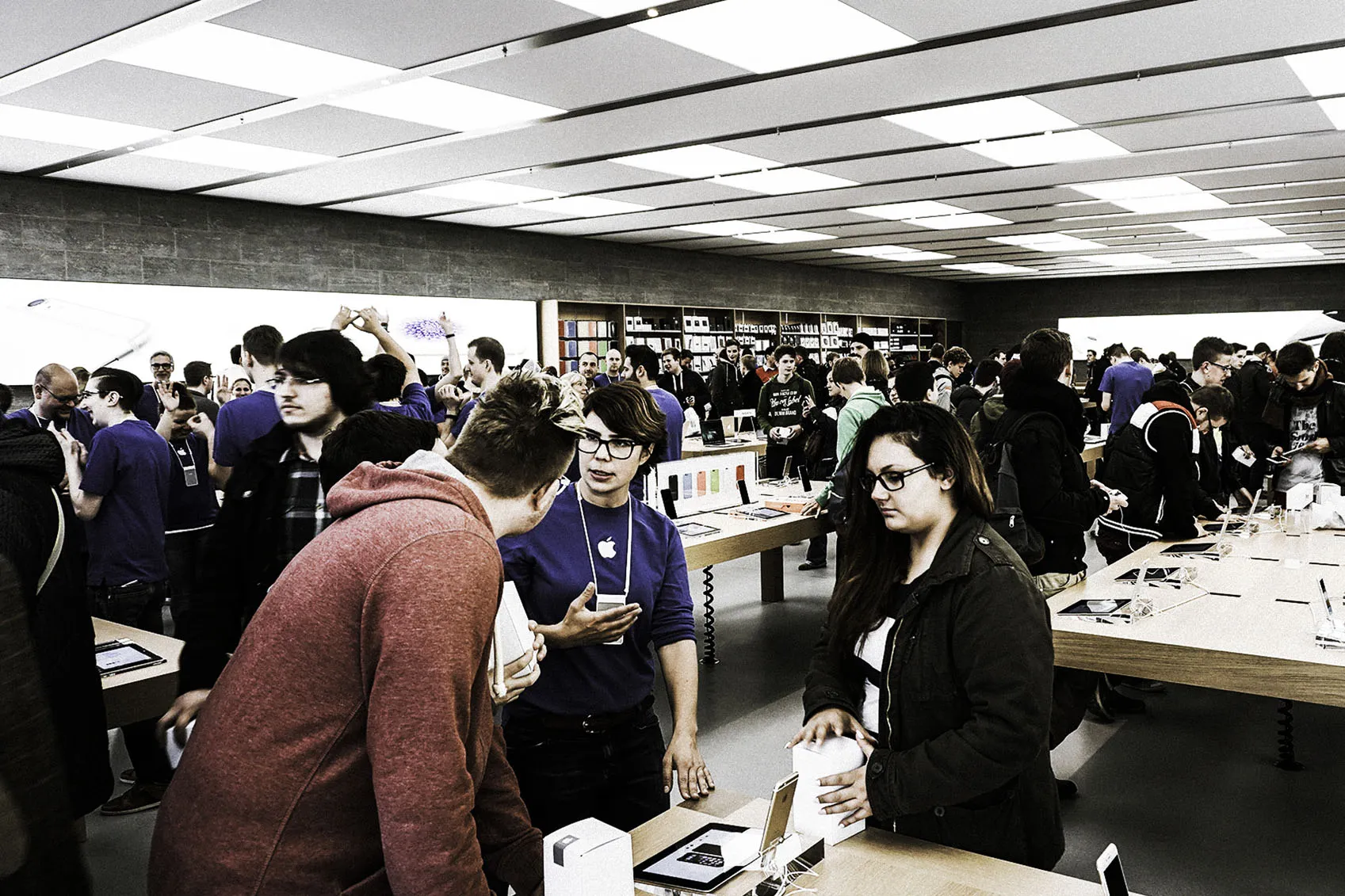
So, back to the topic: the Apple Store. No other company has managed to make its brand this "experiential" (brands like Gucci, Prada and Louis Vuitton started something similar a long time ago with flagship stores), but also to create a truly lasting customer experience for its visitors before, during and after the purchase.
This Apple customer experience is planned in detail and executed perfectly in Apple Stores around the world - every single day they are open. It is a carefully staged interaction of infrastructure, products, employees and customers.
The Apple Store offers the perfect stage and is designed and built in the style of boutique hotels. The marketing term boutique hotel comes from the USA and describes small, luxurious hotels, which are also increasingly found in Europe.
They typically differ from large hotel chains through more personal service and design. They are dedicated to a particular theme or style and are furnished accordingly. The boutique hotel style is easy to recognize in Apple's presentation of products (long, medium-height tables where products are neatly arranged - like newspapers or magazines in a hotel lobby), in the sales staff as personal advisors (who not only explain the product but can also take payment on the spot, like a waiter in a restaurant), and in the Genius Bar (where experts solve individual problems or simply give tips, like a hotel concierge who organizes concert tickets, makes a restaurant reservation, or shares insider tips).
Emotional elements play a major role as well. The first customers to enter after opening walk through a corridor of applauding Apple employees - every day, not only on the opening day of a new store.
Customers who have queued for hours or even camped overnight to get the newly released iPhone or iPad are celebrated like heroes. By now, customers even have themselves photographed in front of or inside the Apple Store, the way other people take photos in front of Neuschwanstein, to show those at home a souvenir of their shopping experience.
The technical support in Apple Stores is excellent and helps customers with shopping or finding information. When the store closes, you can watch Apple employees cleaning iPads, iMacs and more.
They clean the valued products with great care, as if they were golden chandeliers in a grand hotel lobby. All of these impressions are based on the elements Apple designed for the planned customer experience - nothing is left to chance.
The success formula - whether for Disney, Apple, or your business - is: "Extraordinary customer experiences do not happen by accident!"
Apple Stores now have more visitors than all Disney parks combined. So plan the customer experience that your existing and potential customers should have with your products and services. Be innovative, be creative, and stay authentic.