Have you noticed that more and more companies are trying to connect their physical offering with their online presence into a multichannel experience for customers?
Our lives have changed massively in many areas within just a few years due to the constantly evolving internet. Today's customers have completely different expectations and options. Companies must respond with sustainable changes to sales channels, value chains and everyday work culture.
New technologies create new possibilities, so the future must be multichannel. But is that really true? Does customer experience automatically get better? And what do you have to do to avoid falling into the multichannel trap?
In general, multichannel refers to the parallel use of multiple sales channels to reach higher market coverage, increase loyalty and acquire new customers through customer-friendly channel design, realize cost-saving potential and increase distribution efficiency, reduce risk through a channel portfolio, and realize synergies.
Multichannel is therefore not new. Shopping in stores, via catalog, fax, phone, at trade fairs or through direct door-to-door sales has existed for a long time.
By now, however, most companies focus on offline versus online. Fear of losing customers and revenue to the web is growing.
Headlines like "Every fifth euro will soon roll online, retailers slow expansion" or "Online retail in 2012 accounts for only about 7% of German retail revenue, but grows at double-digit rates while brick-and-mortar stagnates" create discomfort for many business owners. So what now?
Companies have three options. They can (1) wait, observe online business in their industry, and focus on their established offline business. They can (2) take the step into a separate online business. Or they can (3) choose an integrated online business.
Careful: in option 3, customers do not experience multiple companies. They experience one and the same provider and expect identical assortments and prices online and offline, plus complementary services with tangible added value.
The key is that customers can interact across all touchpoints and channels, and that the company recognizes them where possible and responds to their individual needs and purchase history.
Multichannel is not sensible for every company. It looks different for every company, and the form and execution must always be aligned with target customers' needs. Logical, right?
And yet after expensive "rollouts" of multichannel initiatives, revenue or margin goals are often not achieved, or measures fail completely. After the first disappointment comes the big WHY. In practice, that why usually lies in one of the following causes, or a combination.
The little ABC of multichannel failure:
- In many organizations, especially in sales, the need to build additional channels is not seen, is underestimated, or there is fear that the offline business could be cannibalized by online activities. Management decides for multichannel anyway - because everyone does it, especially competitors, and because sales might stagnate or decline. "If we sell via every imaginable channel, we will reach all customers and make more revenue!" Sometimes paired with an "everything for everyone and as before" concept, under the motto: "The customer, that unknown creature."
- During implementation, affected departments, existing processes and systems, organizational elements, infrastructure needs, required training for daily execution by employees, and company culture are not sufficiently considered.
- Areas involved in multichannel measures and directly affected departments are measured against competing targets, for example e-commerce revenue versus in-store revenue.
Welcome to the multichannel trap. For customers, this is often when it becomes painfully clear what previously already did not work 100%.
Why? Because multichannel does not solve existing causes of customer and revenue loss. On the contrary: it creates new, additional and often larger challenges that customers feel quickly, and employees (especially those in direct customer contact) feel as well.
This is particularly visible in industries with intensive customer contact. "Click & collect" or "in-store pickup" describes the option for customers to pick up goods ordered online at a physical location (for example a store).
Many companies advertise it, but some are surprised when 50% or more of online orders are actually picked up in person.
Now you have achieved, for whatever reason, bringing the online customer into the store - and then you do not know what to do with them, or worse, you perceive them as a nuisance.
This curious behavior often appears in companies that, in the past, responded to growing internet competition with cost and price offensives instead of service offensives and competent staff.
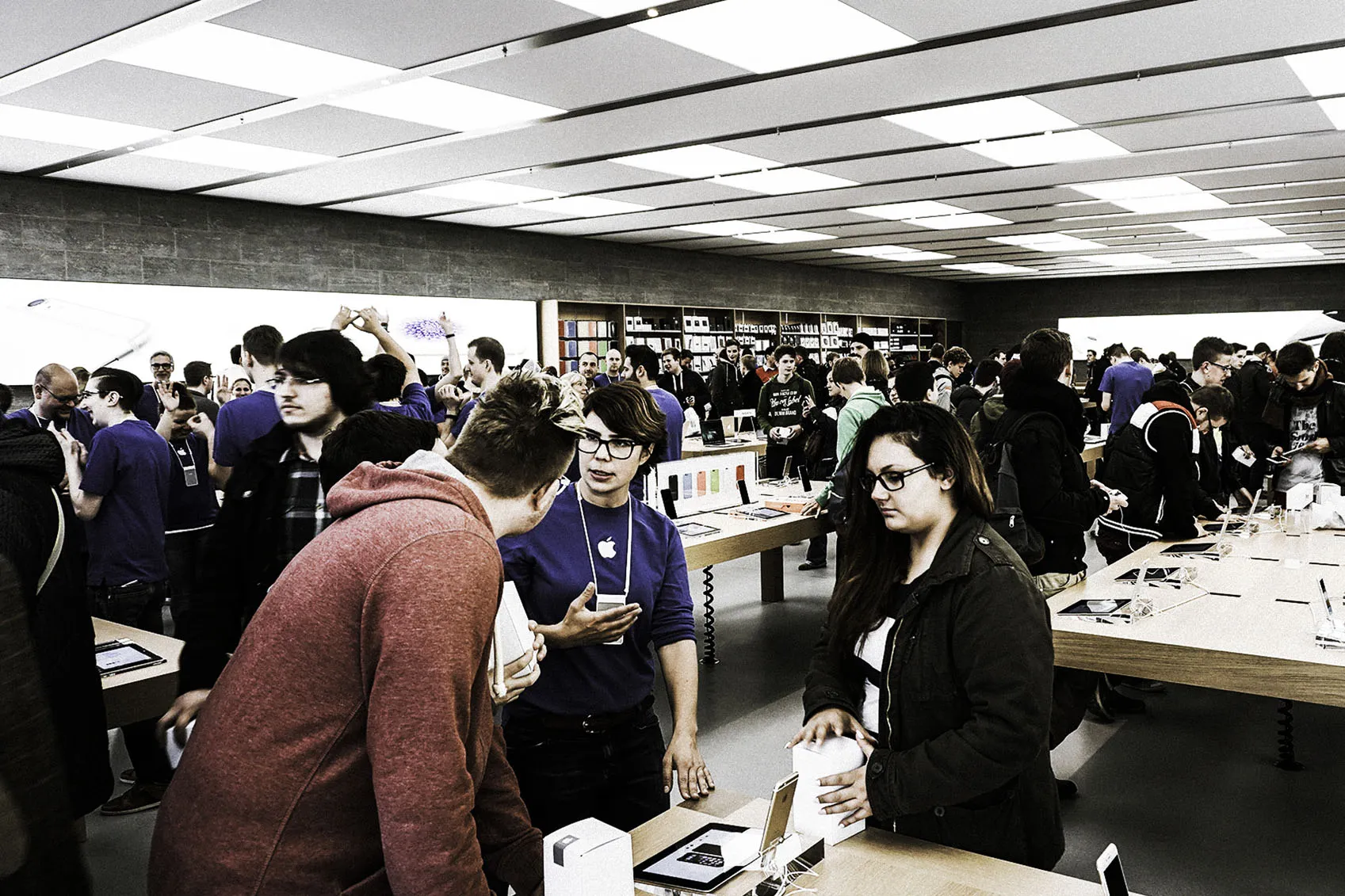
Who is supposed to advise customers and inspire additional purchases? Often customers experience pickup consulting either as employees fleeing when they appear, or as "advice" by reading product features from the packaging.
If a customer, driven by the devil, intends to buy something additional, perhaps even a matching item, they are not unlikely to face different prices between the company's online and offline channel.
But no problem: with enough persistence, the disillusioned employee eventually grants the online price. Wow - what a sustainably delightful customer experience. Enjoy the subsequent social media echo.
Not meant negatively, but in the context of click & collect, I also noticed a press release by Hervis from November 6, 2013.
"Multichannel offensive: Hervis expands its success concept in 100 stores in Austria and the CEE region"... "the multichannel offensive means many advantages for customers... for Hervis, customers and their need for more ways to shop are central... one of the many new added values for customers in the 100 stores is that they can try products on site and get advice..." (sic).
Wow - try and get advice, what a crazy idea. I always thought it was normal that customers who enter a store can get advice and try products. Apparently not. But please do not be offended, Hervis communications team - surely well meant, but it does sound a bit odd.
Companies that are new to the multichannel world often risk losing focus on their core business or falling into silo thinking, because channels largely act in isolation.
How often do you, as a customer, stand in front of an employee who, with a pitying head shake, tells you that nothing can be done for products ordered in the web shop - the spectrum ranges from electronics to train tickets. A sobering insight for customers, and one that contradicts expensive advertising and the brand promise given there.
This challenge is not limited to large companies. With offerings from providers such as Shopify, small and medium-sized companies can open a professional web shop without large IT budgets and without e-commerce know-how, and then face the same multichannel challenges as the big players.
So how does a company become a successful multichannel company and create cross-channel, delightful customer experiences?
The golden rule is to make a strategic perspective shift: outside-in instead of inside-out. Start seeing your company, its touchpoints and its offering through your customers' eyes, instead of pumping products and services through various channels to every possible consumer.
Unlike a pure channel approach, the goal is not to offer customers random purchasing channels, but to provide well-connected, deliberately designed touchpoints, accompany customers on their journey, and consciously give them the option to decide at any time. There is a term for this: connected commerce.
For successful multichannel, a company needs not only good organization and clear processes, but also the right software to operate customer-oriented channels, connecting processes and core data.
More and more connected commerce ideas are becoming reality. Pizza Hut, for example, wants to digitize the ordering process in its restaurants.
Instead of choosing from a long list of pizza creations whose toppings rarely match individual taste and waiting for service, restaurant visitors can build their favorite pizza themselves and place the order immediately. Link: https://www.youtube.com/watch?v=xvT0MCugb58
Miele takes another path. Alongside a strong web presence, from its own shop to a well-filled YouTube channel, Miele focuses on excellent on-site experience. The first Miele Gallery opened in Berlin on 650 m2 at a top address.
The credo: "This is about you. Your wishes and questions, your individual ideas are at the center. We show and explain Miele products and find out together which fit you best and the specifics of your household. Experience firsthand how Miele devices feel, how they work and how they improve your quality of life. We guarantee the highest consulting competence, in line with our tradition: best quality with long service life." Link: https://www1.miele.de/ex/microsite/de/gallery-berlin/
Competition from the web does not sleep. Small and large internet companies increasingly try to gain a foothold offline, or at least integrate offline advantages into their own business model.
Trunk Club combines an online shop for menswear with professional advice by a stylist, as you would expect in high-quality brick-and-mortar fashion retail. The website offers an interactive shopping experience so men can shop from home conveniently.
Customers create a profile so fashion experts learn more about them. Additional contact happens via phone, email, SMS, an app or the website. Customers then receive a personal package containing 8 to 10 clothing items with coordinated styling.
After trying them on, they decide what to keep and what to return for free. For future orders (which can also happen automatically), customers are supported by the same fashion expert, saving time and ensuring consistency.
Prices match retail. Payment is due only for items that are kept. Link: https://www.trunkclub.com/
Amazon, the mother of all web shops, dominates many areas of online retail today. With initiatives like Prime Pantry (https://www.youtube.com/watch?v=XxNqCCfdtvg), it increases pressure on brick-and-mortar in its core space.
Another initiative is Amazon Dash. With a small stick, customers scan barcodes of items they need, or even dictate their shopping list via voice. The stick is connected via Wi-Fi and transmits data to Amazon Fresh, where customers can edit and submit the list.
Amazon promises next-day delivery, initially only in selected US cities. The stick is free, but Amazon Fresh costs around $300 per year (including Prime).
Reports suggested Amazon planned to introduce a grocery service in Germany, with fresh produce, meat, fish and dairy, and logistics infrastructure in multiple locations. Link: https://www.youtube.com/watch?v=aFYs9zqYpdM
Personal service and excellent support by employees remain central - with or without multichannel.
The 5 action areas for the "perfect multichannel" employee:
- Passion - employees need passion for their company, the brand and the designed customer experience.
- Role model - employees need knowledge about the different roles of colleagues with direct or indirect customer contact throughout the customer journey, and a deep understanding of their own role.
- Knowledge - employees need continuous training to deliver excellent customer experience daily and deep knowledge of their own products and competitors.
- Tools - employees need access to relevant customer information to connect online and offline in the customer's interest.
- Evaluation - employees must be measured and rewarded based on cross-channel KPIs and outcomes.
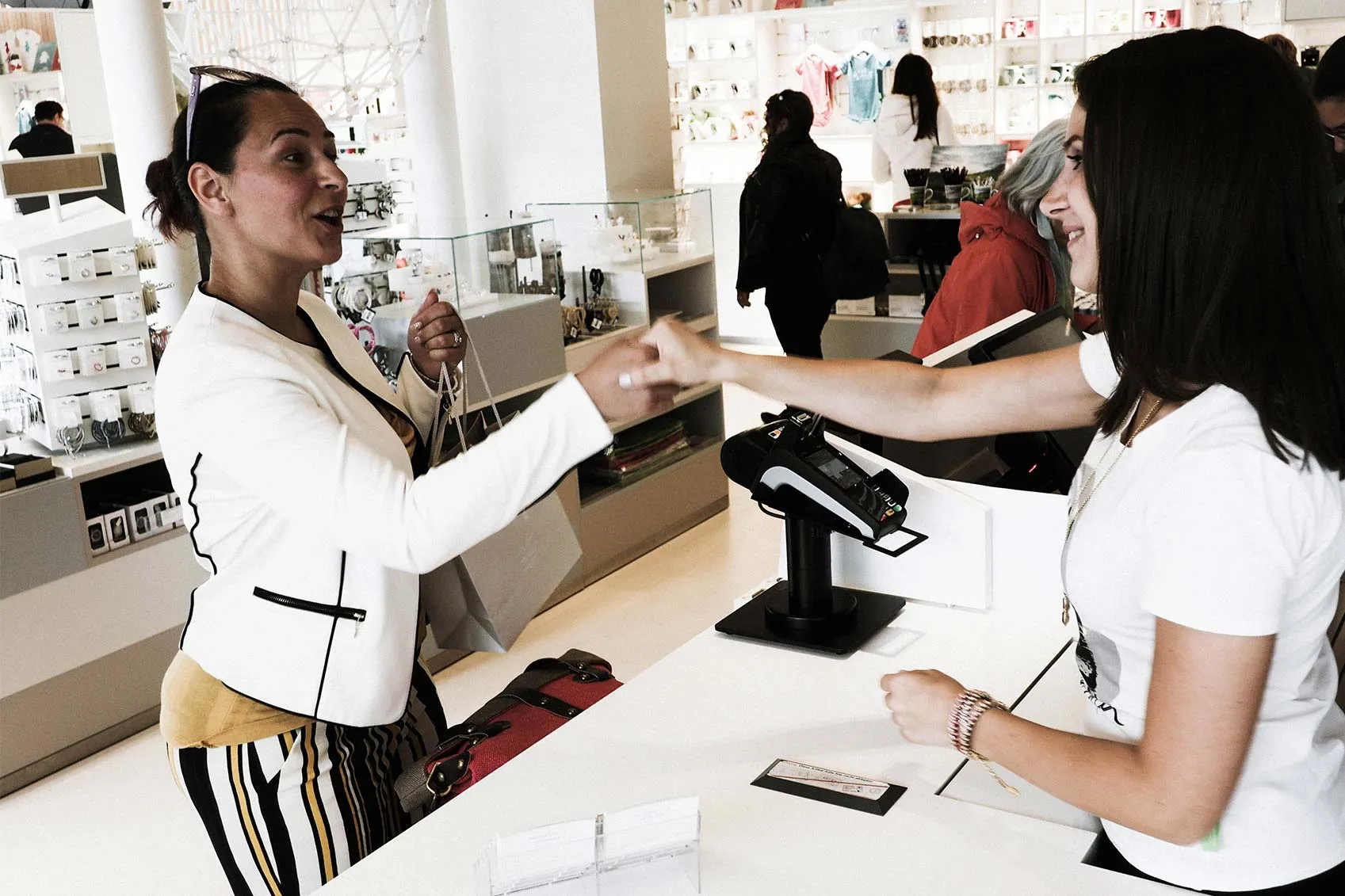
The perfect customer experience decides. Personal interaction, competence, emotion, experience and service are just some advantages of the offline business compared to online. Technology can support excellent personal service, but it can never replace it.
Google the term "multichannel" and you will get millions of results. Do the same for "perfect service" and you will find fewer. For me, that is an expression of growing faith in technology.
Even if everyone agrees that companies must face multichannel challenges and connected commerce, one factor will not lose importance: the personal customer experience. Customers are and remain humans, and even in the web age they want personal, delightful experiences.
Companies should ask themselves two questions before introducing multichannel: "What does the customer journey look like for our different customer groups today?" and "Which channels does our company use today and in the future as impulse, sales or service channels, and how do we design and merge them into a delightful experience?"
The biggest challenge in multichannel is rising complexity across the company. That must be addressed with convergent processes and practical training for all employees.